Cyprus Guide

History of Cyprus


Ancient Times:

The earliest confirmed site of human activity on Cyprus is Aetokremnos, situated on the south coast, indicating that hunter-gatherers were active on the island from around 10,000 BC, with settled village communities dating from 8200 BC. The arrival of the first humans correlates with the extinction of the dwarf hippos and dwarf elephants. Water wells discovered by archaeologists in western Cyprus are believed to be among the oldest in the world, dated at 9,000 to 10,500 years old.
Khirokitia
Remains of an 8-month-old cat were discovered buried with its human owner at a separate Neolithic site in Cyprus. The grave is estimated to be 9,500 years old, predating ancient Egyptian civilization and pushing back the earliest known feline-human association significantly. The remarkably well-preserved Neolithic village of Choirokoitia (also known as Khirokitia) is a UNESCO World Heritage Site dating to approximately 6800 BC.
Temple to Apollo Ilatis outside the city of Limassol.

The island was part of the Hittite empire during the late Bronze Age until the arrival of two waves of Greek settlement. The first wave consisted of Mycenaean Greek traders who started visiting Cyprus around 1400 BC. A major wave of Greek settlement is believed to have taken place following the Bronze Age collapse of Mycenaean Greece in the period 1100–1050 BC, with the island's predominantly Greek character dating from this period.[33][34] Cyprus occupiesSalamis War an important role in Greek mythology being the birthplace of Aphrodite and Adonis, and home to King Cinyras, Teucer and Pygmalion. Beginning in the 8th century BC Phoenician colonies were founded on the south coast of Cyprus, near present day Larnaca and Salamis.

Cyprus was ruled by Assyria for a century starting in 708 BC, before a brief spell under Egyptian rule and eventually Persian rule in 545 BC. The Cypriots, led by Onesilos, king of Salamis, joined their fellow Greeks in the Ionian cities during the unsuccessful Ionian Revolt in 499 BC against the Achaemenid Empire. The revolt was suppressed, but Cyprus managed to maintain a high degree of autonomy and remained oriented towards the Greek world.

The island was brought under permanent Greek rule by Alexander the Great and the Ptolemies of Egypt following his death. Full Hellenization took place during the Ptolemaic period, which ended when Cyprus was annexed by the Roman Republic in 58 BC.

Middle Ages:

Main article: Cyprus in the Middle Ages
Portrait of Catherine Cornaro, Queen of Cyprus.

When the Roman Empire was divided into Eastern and Western parts in 395, Cyprus became part of the East Roman, or Byzantine Empire, and would remain part of it until the crusades some 800 years later. Under Byzantine rule, the Greek orientation that had been prominent since antiquity developed the strong Hellenistic-Christian character that continues to be a hallmark of the Greek Cypriot community. Beginning in 649, Cyprus suffered from devastating raids launched from the Levant, which continued for the next 300 years. Many were quick piratical raids, but others were large-scale attacks in which many Cypriots were slaughtered and great wealth carried off or destroyed.

No Byzantine churches survive from this period, thousands of people were killed, and many cities – such as Salamis - were destroyed and never rebuilt. Byzantine rulVenetian and Lusignan areae was restored in 965, when Emperor Nikephoros II Phokas scored decisive victories on land and sea. In 1191, during the Third Crusade, Richard I of England captured the island from Isaac Komnenos of Cyprus. He used it as a major supply base that was relatively safe from the Saracens. A year later Richard sold the island to the Knights Templar, who, following a bloody revolt, in turn sold it to Guy of Lusignan. His brother and successor Amalric was recognized as King of Cyprus by Henry VI, Holy Roman Emperor.

Following the death in 1473 of James II, the last Lusignan king, the Republic of Venice assumed control of the island, while his Venetian widow, Queen Caterina Cornaro, reigned as figurehead. Venice formally annexed Cyprus in 1489, following the abdication of Caterina. The Venetians fortified Nicosia by building the famous Venetian Walls, and used it as an important commercial hub. Throughout Venetian rule, the Ottoman Empire frequently raided Cyprus. In 1539 the Ottomans destroyed Limassol and so fearing the worst, the Venetians also fortified Famagusta and Kyrenia.

During the almost four centuries of Latin rule, there existed two societies on Cyprus. The first consisted of Frankish nobles and their retinue, as well as Italian merchants and their families. The second, the majority of the population, consisted of Greek Cypriots, serfs and laborers. Although a determined effort was made to supplant native traditions and culture, the effort failed.

Ottoman Empire:

Main article: Cyprus under the Ottoman Empire
Historical map of Cyprus by Piri Reis.

In 1570, a full scale Ottoman assault with 60,000 troops brought the island under Ottoman control, despite stiff resistance by the inhabitants of Nicosia and Famagusta. 20,000 Nicosians were put to death, and every church, public building, and palace was looted. The previous Latin elite was destroyed and the first significant demographic change since antiquity took place when Ottoman Janissaries were settled on the island.

The Ottomans abolished the feudal system previously in place and applied the millet system to Cyprus, under which non-Muslim peoples were governed by their own religious authorities. In a reversal from the days of Latin rule, the head of the Church of Cyprus was invested as leader of the Greek Cypriot population and acted as mediator between Christian Greek Cypriots and the Ottoman authorities. Ottoman rule of Cyprus was at times indifferent, at times oppressive, depending on the temperaments of the sultans and local officials, and during this period the island fell into economic decline.

Reaction to Ottoman misrule led to uprisings by both Greek and Turkish Cypriots, although none were successful. By 1872, the population of the island had risen to 144,000 comprising 44,000 Muslims and 100,000 Christians. Centuries of neglect by the Turks, the unrelenting poverty of most of the people, and the ever-present tax collectors fuelled Greek nationalism, and by 19th century the idea of enosis, or union, with newly independent Greece was firmly rooted among Greek Cypriots.

British Empire:

Main article: Modern history of Cyprus
Hosting the British flag at Nicosia

In the aftermath of the Russo-Turkish War (1877–1878), administration, but not sovereignty, of the island was ceded to the British Empire in 1878 in exchange for guarantees that Britain would use the island as a base to protect the Ottoman Empire against possible Russian aggression. The island would serve Britain as a key military base in its colonial routes. By 1906, when the Famagusta harbour was completed, Cyprus was a strategic naval outpost overlooking the Suez Canal, the crucial main route to India which was then Britain's most important colony. Following the outbreak of The First World War and the entry of the Ottoman Empire on the side of the Central powers, Great Britain formally annexed the island in 1914.

In 1915, Britain offered Cyprus to Constantine I of Greece on condition that Greece join the war on the side of the British, which he declined. In 1923, under the Treaty of Lausanne, the nascent Turkish republic relinquished any claim to Cyprus and in 1925 it was declared a British Crown Colony. Many Greek Cypriots fought in the British Army during both World Wars, in the hope that Cyprus would eventually be united with Greece. During the Second World War many enlisted in the Cyprus Regiment.

In January 1959, the Church of Cyprus organized a referendum, which was boycotted by the Turkish Cypriot community, where over 90%[clarification needed] voted in favor of "enosis", meaning union with Greece. Restricted autonomy under a constitution was proposed by the British administration but eventually rejected. In 1955 the EOKA organisation was founded, seeking independence and union with Greece through armed struggle. At the same time the TMT, calling for Taksim, or partition, was established by the Turkish Cypriots as a counterweight. Turmoil on the island was met with force by the British.

Independence:

The first president of Cyprus Makarios III

On 16 August 1960, Cyprus attained independence after the Zürich and London Agreement between the United Kingdom, Greece and Turkey. The UK retained the two Sovereign Base Areas of Akrotiri and Dhekelia while government posts and public offices were allocated by ethnic quotas giving the minority Turks a permanent veto, 30% in parliament and administration, and granting the three mother-states guarantor rights.

In 1963 inter-communal violence broke out, partially sponsored by both "motherlands" with Turkish Cypriots being forced into enclaves and Cypriot President Archbishop Makarios III calling for unilateral constitutional changes as a means to ease tensions over the whole island. The United Nations was involved and the United Nations forces in Cyprus (UNFICYP) deployed at flash points.

In 1964, Turkey attempted to intervene in Cyprus in response to the ongoing Cypriot intercommunal violence, but was stopped by a strongly worded telegram from the U.S. President Lyndon B. Johnson on 5 June 1964; who warned that the United States would not stand beside Turkey in case of a consequential Soviet invasion of Turkish territory.

Contemporary era:

Main articles: Greek military junta of 1967–1974, Cypriot intercommunal violence, and Turkish invasion of Cyprus
Ledra street in Nicosia ended up in the United Nations Buffer Zone (known as the Green line).

Following a coup d'état engineered by the Greek Junta, Turkey launched a full-scale military invasion of the island in 1974. The Turkish air force began bombing Greek positions on Cyprus, hundreds of paratroops were dropped in the area between Nicosia and Kyrenia, where well-armed Turkish Cypriot enclaves had been long-established, while off the Kyrenia coast 30 Turkish troop ships protected by destroyers landed 6,000 men as well as tanks, trucks, and armored vehicles.

Three days later, when a ceasefire had been agreed, Turkey had landed 30,000 troops on the island and captured Kyrenia, the corridor linking Kyrenia to Nicosia, and the Turkish-Cypriot quarter of Nicosia. The junta in Athens, and then the Sampson regime in Cyprus fell from power. In Nicosia Glafkos Clerides assumed the presidency and constitutional order was restored; ostensibly removing the pretext the Turks gave for the invasion. The Turks used a period of negotiations to reinforce their Kyrenia bridgehead and prepare for the second phase of the invasion, which began on 14 August and resulted in the seizure of Morphou, Karpasia, Ammochostos and the Mesaoria. The Greek forces were unable to resist the Turkish advance.

International pressure led to a ceasefire at which point 37% of the island had been taken over by the Turks and 180,000 Greek Cypriots were evicted from their homes in the north. At the same time, around 50,000 Turkish Cypriots moved to the areas under the control of the Turkish Forces and settled in the properties of the displaced Greek Cypriots. In mid-1975, the United States Congress amongst a variety of sanctions against Turkey, imposed an arms embargo on Turkey for using American-supplied equipment during the Turkish invasion of Cyprus in 1974.

In 1983 Turkish Cypriots proclaimed the Turkish Republic of Northern Cyprus which is recognised only by Turkey. As of today, there are 1,534 Greek Cypriots and 502 Turkish Cypriots missing as a result of the fighting. The events of the summer of 1974 dominate the politics on the island, as well as Greco-Turkish relations. Around 150,000 settlers from Turkey are believed to be living in the north in violation of the Geneva Convention and various UN resolutions. Following the invasion and the capture of its northern territory by Turkish troops, the Republic of Cyprus announced that all of its ports of entry in the north are closed, as they are effectively not under its control.[citation needed] The last major effort to settle the Cyprus dispute was the Annan Plan. It gained the support of the Turkish Cypriots but was rejected by the Greek Cypriots, who perceived the Annan Plan to be both unbalanced and excessively pro-Turkish.

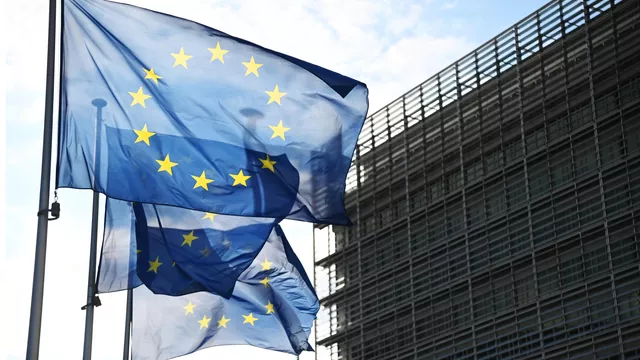
On May 1, 2004 Cyprus joined the European Union together with nine other countries. In July 2006, the island served as a safe haven for people fleeing Lebanon because of the conflict between Israel and Hezbollah.

In March 2008, a wall that for decades had stood at the boundary between the Greek Cypriot controlled side and the UN buffer zone was demolished. The wall had cut across Ledra Street in the heart of Nicosia and was seen as a strong symbol of the island's 32-year division. On 3 April 2008, Ledra Street was reopened in the presence of Greek and Turkish Cypriot officials.


History of North Cyprus:

Main articles: Cyprus intercommunal violence and Turkish invasion of Cyprus

The history of Northern Cyprus begins with the gaining of independence of a united Cyprus from British rule in August 1960. Independence was only achieved after both Greek and Turkish Cypriots agreed to respectively abandon plans for enosis (union with Greece) and taksim (Turkish for 'partition'). The agreement involved Cyprus being governed under a constitution which apportioned Cabinet posts, parliamentary seats and civil service jobs on an agreed ratio between the two communities. Within three years, tensions between the Greek Cypriots and Turkish Cypriots in administrative affairs began to show. In particular, disputes over separate municipalities and taxation created a deadlock in government. In 1963 President Makarios proposed unilateral changes to the constitution, via 13 amendments. Turkey and the Turkish Cypriots rejected the proposed amendments as an attempt to settle constitutional disputes in favour of the Greek Cypriots and as a means of demoting Turkish status from co-founders of the state to one of minority status removing their constitutional safeguards in the process. Turkish Cypriots filed a lawsuit against the 13 amendments in Supreme Constitutional Court of Cyprus (SCCC). Makarios clarified not to comply with whatever the decision of SCCC will be, and defended his amendments as being necessary "to resolve constitutional deadlocks" as opposite to the stance of SCCC. On 25 April 1963, SCCC decided that Makarios' 13 amendments are illegal. On 21 May, president of SCCC resigned due to the Makarios' stance. On 15 July, Makarios ignored the decision of SCCC. On 30 November, Makarios legalized the 13 proposals.

In 1963, the Greek Cypriot wing of the government created the Akritas plan which outlined a policy that would remove Turkish Cypriots from the government and ultimately lead to union with Greece. The plan stated that if the Turkish Cypriots objected then they should be "violently subjugated before foreign powers could intervene". On 21 December 1963, a Turkish Cypriot crowd clashed with the plainclothes special constables of Yorgadjis. Almost immediately, intercommunal violence broke out with a major Greek Cypriot paramilitary attack upon Turkish Cypriots in Nicosia and Larnaca. Though the TMT — a Turkish resistance group created in 1959 to promote a policy of taksim (division or partition of Cyprus), in opposition to the Greek Cypriot nationalist group EOKA and its advocacy of enosis (union of Cyprus with Greece) — committed a number of acts of retaliation, historian of the Cyprus conflict Keith Kyle noted that "there is no doubt that the main victims of the numerous incidents that took place during the next few months were Turks." Seven hundred Turkish hostages, including women and children, were taken from the northern suburbs of Nicosia. Nikos Sampson, a nationalist and future coup leader, led a group of Greek Cypriot irregulars into the mixed suburb of Omorphita and attacked the Turkish Cypriot population. By 1964, 193 Turkish Cypriots and 133 Greek Cypriots had been killed, with a further 209 Turks and 41 Greeks missing and presumed dead.
A map of the Turkish Cypriot Enclaves before 1974 military operations

Turkish Cypriot members of the government had by now withdrawn, creating an essentially Greek Cypriot administration in control of all institutions of the state. Widespread looting of Turkish Cypriot villages prompted 20,000 refugees to retreat into armed enclaves, where they remained for the next 11 years, relying on food and medical supplies from Turkey to survive. Turkish Cypriots formed paramilitary groups to defend the enclaves, leading to a gradual division of the island's communities into two hostile camps. The violence had also seen thousands of Turkish Cypriots attempt to escape the violence by emigrating to Britain, Australia and Turkey.

The view of Turkish Cypriots: The Cyprus's Supreme Court ruling found that Makarios had violated the constitution by failing to fully implement its measures and that Turkish Cypriots had not been allowed to return to their positions in government without first accepting the proposed constitutional amendments.[24] Also, Turkish Cypriots did not self-segregate themselves: then–United Nations Secretary General, U Thant's S/5950 (10 September 1964) report (paragraph 180) UNFICYP carried out a detailed survey of all damage to properties throughout the island during the disturbances;it shows that in 109 villages, most of them Turkish-Cypriot or mixed villages, 527 houses have been destroyed while 2,000 others have suffered damage from looting. As a result, Turkish Cypriot Provisional Administration founded on 28 December 1967.

The view of Greek Cypriots: the Turkish Cypriots' withdrawal from the government and their retreat into enclaves was a voluntary action, prompted by their desire to form a state of their own: the then–United Nations Secretary General, U Thant, in 1965 stated that Turkish Cypriots had furthered a policy of "self-segregation" and taken a "rigid stand" against policies which might have involved recognizing the government's authority.
Founder, and former President, Rauf Denktaş

On 15 July 1974, the Greek military junta of 1967-1974 backed a Greek Cypriot military coup d'état in Cyprus. President Makarios was removed from office and Nikos Sampson took his place. Turkey claimed that, under the 1960 Treaty of Guarantee, the coup was sufficient reason for military action to protect the Turkish Cypriot populace, and thus Turkey invaded Cyprus on 20 July. Following Turkey's military intervention, the coup failed and Makarios returned to Cyprus. Turkish forces proceeded to take over the northern four-elevenths of the island (about 37% of Cyprus's total area). After the hostilities in 1974, the Greek Cypriots in Rizokarpaso agreed to live under Turkish Cypriot administration and stayed in Northern Cyprus. The other Greek Cypriots in the North (approximately 160,000) chose to live under Greek Cypriot administration and fled to the south while 50,000 Turkish Cypriots fled north; in accordance with the Population Exchange Agreement between Turkish and Greek Cypriots under the auspices of United Nations on 2 August 1975. Approximately 1,500 Greek Cypriots and 500 Turkish Cypriots remain missing.

In 1975 the "Turkish Federative State of Cyprus" (Kıbrıs Türk Federe Devleti) was declared as a first step towards a future federated Cypriot state, but was rejected by the Republic of Cyprus, the UN, and the international community. After eight years of failed negotiations with the leadership of the Greek Cypriot community, the north declared its independence on 15 November 1983 under the name of the Turkish Republic of Northern Cyprus. This unilateral declaration of independence was rejected by the UN and the Republic of Cyprus. In recent years the politics of reunification has dominated the island's affairs. It was hoped that Cyprus's planned accession into the European Union would act as a catalyst towards a settlement, and in 2004 a United Nations–brokered peace settlement was presented in a referendum to both sides. The proposed settlement was opposed by both the president of Cyprus, Tassos Papadopoulos, and Turkish Cypriot president Rauf Denktaş; in the referendum, a majority of Turkish Cypriots accepted the proposal, but Greek Cypriots overwhelmingly rejected it. As a result, Cyprus entered the European Union as a divided island, with Northern Cyprus effectively excluded. Denktaş resigned in the wake of the vote, ushering in the pro-solutionist Mehmet Ali Talat as his successor.